
I get the same question from Denver almost every week now, usually over WhatsApp, usually some version of: “Be honest with me. How bad is it?”
So let me be honest with you, the way I’d be honest with a friend. Because after 23 years in this market, I’m not going to tell you it’s 2021. It isn’t. Anyone telling you otherwise is selling you something.
What the numbers actually say
The August report from DMAR — the Denver Metro Association of Realtors, whose monthly numbers are the ones every agent in this city actually watches — covers July’s closed data. It puts the metro median at $605,000. That’s down a touch from June, and still up about 3% from a year ago. Rates are sitting in the mid-6s. Inventory is well above what we considered normal before the pandemic, and homes are taking longer to sell than they used to.
If you stopped reading there, you’d call it a slow market. And you’d be right — but you’d be missing the part that actually matters, because Denver isn’t one market right now. It’s two.
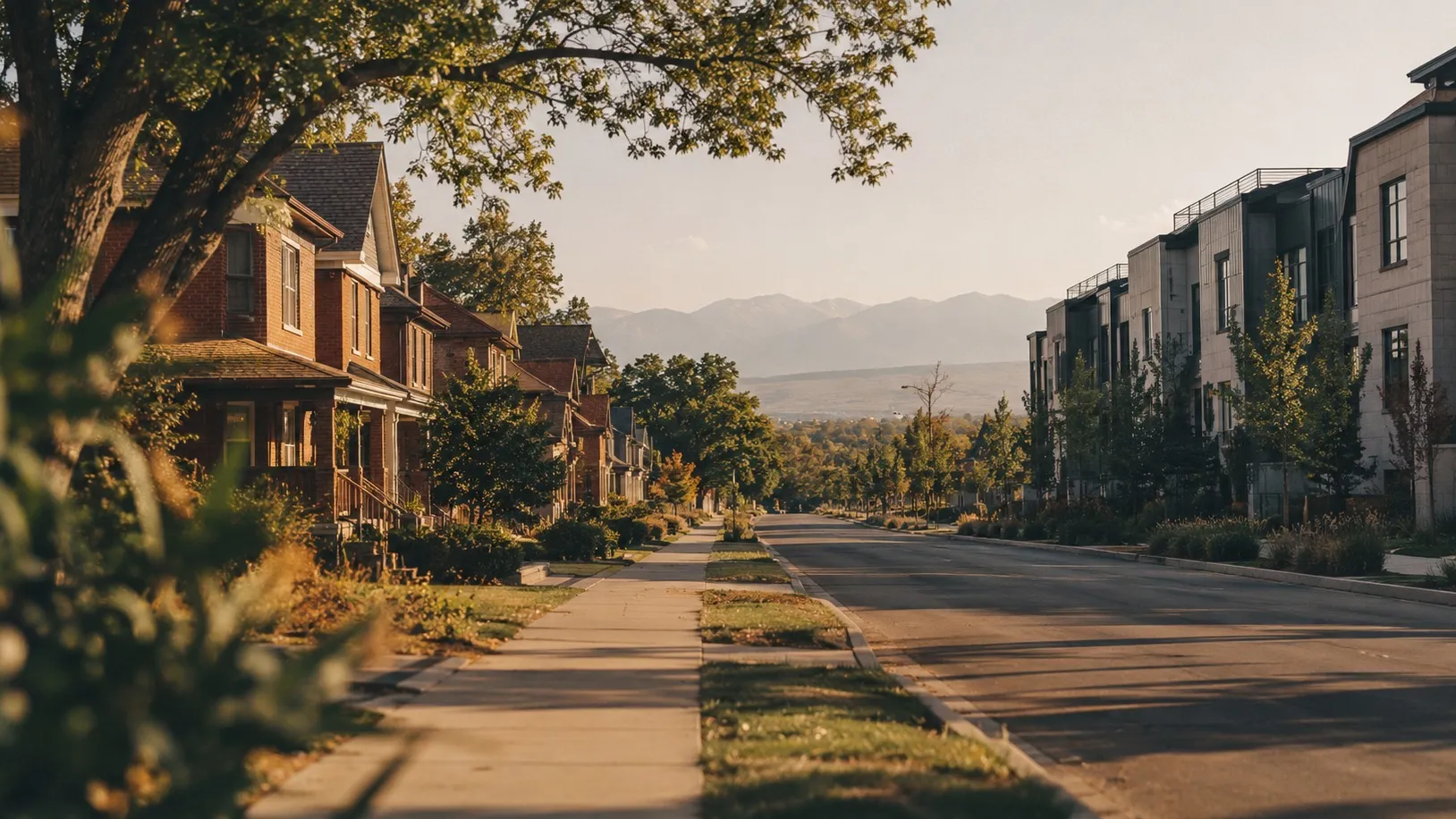
Single-family homes are holding. Roughly three months of inventory, medians in the $660,000 range, and well-priced detached homes are still going under contract in a couple of weeks. Not a frenzy. A functioning market.
Condos and townhomes are hurting. Close to six months of supply, prices down year over year, and closed sales down sharply. A lot of that is HOA insurance — hail claims and construction litigation have pushed premiums up so far that the traditional affordability advantage of buying a condo is getting eaten alive by the monthly dues.
Same city. Two completely different conversations.
If you’re thinking about selling
Here’s what I tell people: a slow market doesn’t mean your house won’t sell. It means your house won’t sell itself.
The homes that move right now are priced with precision on day one, staged properly, and their sellers walk in expecting to negotiate — on price, on concessions, on timeline. The homes that sit are the ones priced off a neighbor’s 2022 comp. The market will not meet you there, and every week you sit, you’re funding the price reduction you should have started with.
If you own a condo, the conversation is harder and I’d rather have it with you directly than pretend a blog post covers it. Sometimes the answer is sell anyway. Sometimes it’s rent it and wait. It depends on your building, your HOA’s insurance situation, and your timeline — and I’d want to look at all three before saying a word.
If you’re buying
For the first time in years, you have real leverage — especially on the attached side. Sellers are negotiating. Concessions are back. Rate buydowns are on the table. The buyers winning right now are the ones treating this window as what it is: the most negotiating power Denver buyers have had in a decade, in a metro whose long-term fundamentals haven’t gone anywhere.
The question behind the question
When people ask me “how bad is it,” what they’re often really asking is: “Can I trust what my agent is telling me?”
That’s fair. This industry earned that suspicion by cheerleading through every market it’s ever been in.
So here’s where I’ve landed after two decades of Denver deals: I’d rather tell you the truth and lose the listing than flatter you and watch your home sit for ninety days. The truth right now is that Denver is slow, split down the middle, and completely workable if you go in with real numbers and a real strategy.
How this works with me in Portugal
If you’ve been following along, you know my family moved to Portugal in June. What that changed about my Denver business: my time zone. What it didn’t change: my license, my company, or my team.
Redhead Luxury Properties is still a licensed Colorado company. On the ground, I work with Paul Stone, broker and owner of Hinge Real Estate — we operate as a team, so showings, inspections, and walkthroughs happen with a professional physically there, while every call and every form still comes directly to me. I’m on WhatsApp with Denver clients most mornings before Colorado wakes up. Honestly, some of my clients hear back from me faster now than when I lived on Genoa Way.
And if you’re an owner living out of state — or out of the country, like me — managing a Denver property from a distance: that’s now my daily life too. I know exactly which parts you can handle from anywhere and which parts need boots on the ground. That’s a longer conversation, and a good one.
Where to start
If you’re weighing a sale, a purchase, or just want the honest read on your specific street — not the metro average — reach out through the site. First conversation is exactly that: a conversation. Real numbers, no cheerleading.